


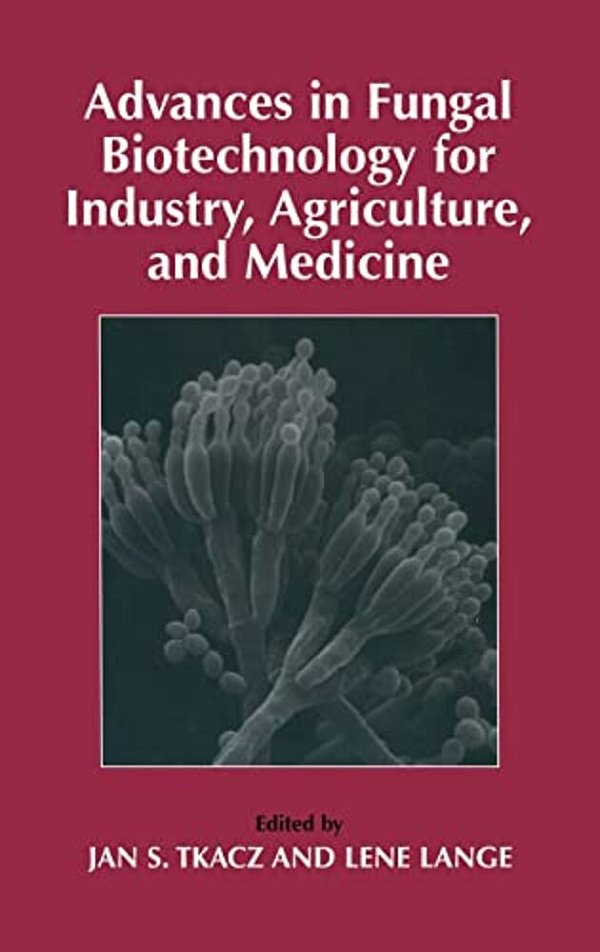
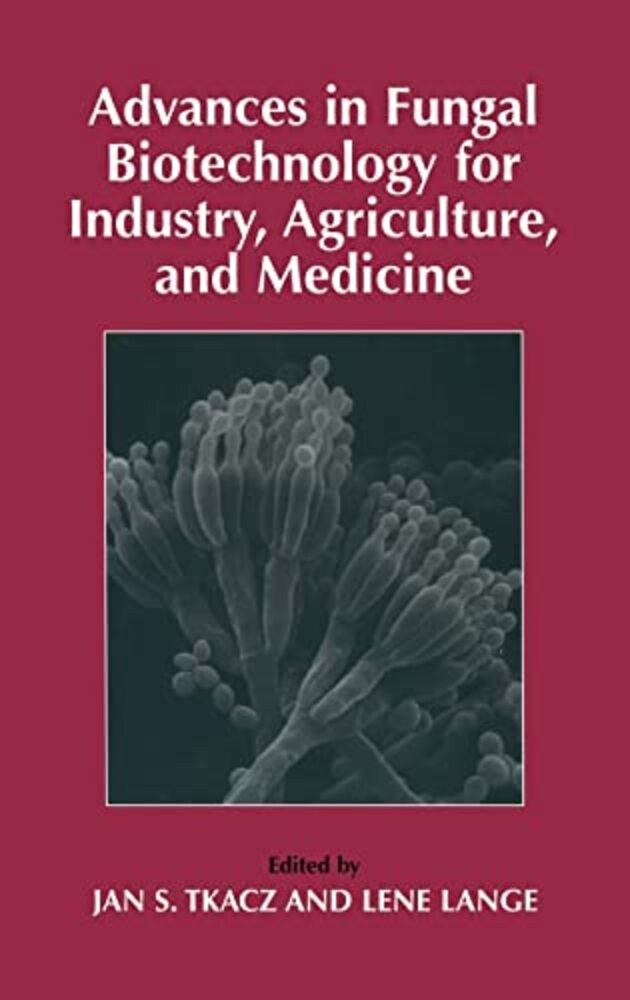
Advances In Fungal Biotechnology For Industry, Agriculture, And Medicine-..
-
- 1x de R$ 821,70 sem juros
- 2x de R$ 410,85 sem juros
- 3x de R$ 273,90 sem juros
- 4x de R$ 205,42 sem juros
-
R$ 780,62

-
R$ 821,70


I. Genetic Technology.- 1. Practical Molecular Taxonomy of Fungi.- 1. Introduction.- 2. Identifying a Fungus to Species-What does it Mean?.- 2.1. Useful Species Definitions.- 2.2. Genealogical Concordance as a Means to Recognize Fungal Species.- 2.3. Molecular Taxonomy in Practice.- 3. How do I Identify an Unknown Fungus?.- 3.1 The Molecular Toolbox.- 3.1.1. DNA Sequence Tools.- 3.1.2. Genotyping Methods: Comparing and Identifying Isolates within a Species.- 3.2. Using the Toolbox.- 3.2.1. Tools for Identifying any Fungus.- 3.2.2. Tools for Identifying Fungi in a Particular Taxonomic Group of Intensive Study.- 4. What is Next?.- References.- Genomics of Filamentous Fungi.- 1. Introduction.- 2. Genomic Projects Focusing on Fungi.- 3. Genome Structure.- 4. Gene Identification and Annotation.- 5. Gene Complement of a Filamentous Fungus.- 6. Novel Aspects of Fungal Biology.- 7. Summary.- References.- A Molecular Tool Kit for Fungal Biotechnology.- 1. Introduction.- 2. Vectors and Transformation.- 3. Gene Cloning Tools for Genomic Approaches.- 4. Fungal Transposons as Tools.- 5. Tools for Identifying Essential Genes.- 5.1. Generating Conditional Lethal Mutants.- 5.2. Inference.- 5.3. Using Controllable Promoters.- 5.4. Post-Transcriptional Gene Silencing (PTGS).- 6. Genome-Based Tools.- 6.1. Genome-Wide Insertional Mutagenesis.- 6.2. Genome-Shuffling.- 7. Summary.- References.- Transformation Mediated by Agrobacterium tumefaciens.- 1. Introduction.- 2. Agrobacterium.- 3. Host Range.- 4. T-DNA Transfer Resembles Bacterial Conjugation.- 5. Accessory Functions Enabling Trans-Kingdom DNA Transfer.- 6. Protein Translocation from Agrobacterium into Host Cells.- 7. T-DNA Integration.- 8. Agrobacterium-Based Vector Systems.- 9. Transformation of Yeasts and Filamentous Fungi.- 10. Concluding Remarks.- 11. References.- II. Special (Secondary) Metabolism.- 5. Fungal Polyketide Synthases in the Information Age.- 1. Introduction.- 1.1. Secondary Metabolites.- 1.2. Polyketides.- 1.3. Types of Polyketide Synthase.- 2. Non-Fungal PKS.- 3. Fungal PKS.- 3.1. 6-Methylsalicyclic Acid Synthase.- 3.2. Fungal PKS Involved in Biosynthesis of Conidial Pigment and Melanin.- 3.3. Fungal Polyketide Mycotoxins-Norsolorinic Acid Synthase (NAS).- 3.4. Polyketide Synthase in T-Toxin Production.- 3.5. Polyketide Synthase in Fumonisin Production.- 3.6. Lovastatin Synthases.- 4. Novel Methods for Accessing PKS Genes.- 4.1. Problems Associated with Cloning Fungal PKS Genes.- 4.2. Early Efforts to Develop Fungal PKS Probes.- 4.3. Assessing Biosynthetic Potential.- 4.3.1. Prokaryotes.- 4.3.2. Lichens.- 4.3.3. Insect and Nematode Associated Fungi.- 4.3.4. Endophytic Fungi.- 4.4 Biosynthetically Informed Approaches for Accessing Fungal PKS Genes.- 4.4.1. KS-Specific Primers.- 4.4.2. KR-Specific Primers.- 4.4.3. CmeT-Specific Primers.- 4.4.4. Lessons and Outlook.- 5. The Genomic Era.- References.- More Functions for Multifunctional Polyketide Synthases.- 1. Introduction.- 2. Architecture and Functions of Fungal Polyketide Synthases.- 2.1. MSAS/OAS Polyketide Synthases.- 2.2. Polyketide Synthases for Aromatic Multi-Ring Products (AR-PKSs).- 2.2.1. Pentaketide 1,3,6,8-Tetrahydroxynaphthalene Synthases.- 2.2.2. Heptaketide Naphthopyrone Synthases.- 2.2.3. PKSs Involved in Aflatoxin Biosynthesis.- 2.3 Polyketide Synthases for Reduced Products (RD-PKSs).- 2.3.1. T-toxin PKS.- 2.3.2. PKSs Involved in Lovastatin Biosynthesis.- 2.3.3. Fumonisin PKS.- 2.3.4. RD-PKS from Alternaría solani.- 3. More Functions for Fungal Polyketide Synthases.- 3.2.1. Claisen Cyclase Domain in AR-PKSs.- 3.2.2. More Functions for AR-PKSs.- 3.2.1. Starter Units.- 3.2.2. N-Termini.- 3.2.3. Interdomain Regions.- 3.2.4. ACP Domains.- 3.3. C-Methyltransferase Domains in RD-PKSs.- 3.4. PSED (Peptide Synthetase Elongation Domain)-Like Domains in RD-PKSs.- 3.5. "Diels-Alderase" in RD-PKSs.- 4. Concluding Remarks.- Acknowledgments.- References.- Peptide Synthesis Without Ribosomes.- 1. Introduction.- 2. Overvi
| ISBN | 9780306478666 |
| Autor(a) | Tkacz, Jan S. |
| Editora | Springer Publishing |
| Ano de edição | 2004 |
| Páginas | 472 |
| Acabamento | Capa Dura |
Produtos relacionados
-
 Advances In Fungal Biotechnology For Industry, Agriculture, And Medicine-..R$ 456,42até 4x de R$ 114,10 sem jurosou R$ 433,60 via Pix
 -
 Molecular Biotechnology Of Fungal ß-Lactam Antibiotics And Related Peptide Synthetases-..R$ 1.825,92até 4x de R$ 456,48 sem jurosou R$ 1.734,62 via Pix
 -
 Fundamentals And Advances In Medical Biotechnology-..R$ 1.825,92até 4x de R$ 456,48 sem jurosou R$ 1.734,62 via Pix
-

Categorias
Conteúdo
Sobre a loja
Myre Livraria, sua livraria online especializada em importação e revenda de livros nacionais e internacionais. Oferecemos uma vasta seleção de materiais didáticos de alta qualidade para aprender inglês, espanhol, francês, alemão e muito mais. Aproveite preços competitivos e entrega rápida em todo o Brasil
Pague com

Selos

Myre Editora Ltda. - CNPJ: 50.295.718/0001-20 © Todos os direitos reservados. 2026
