


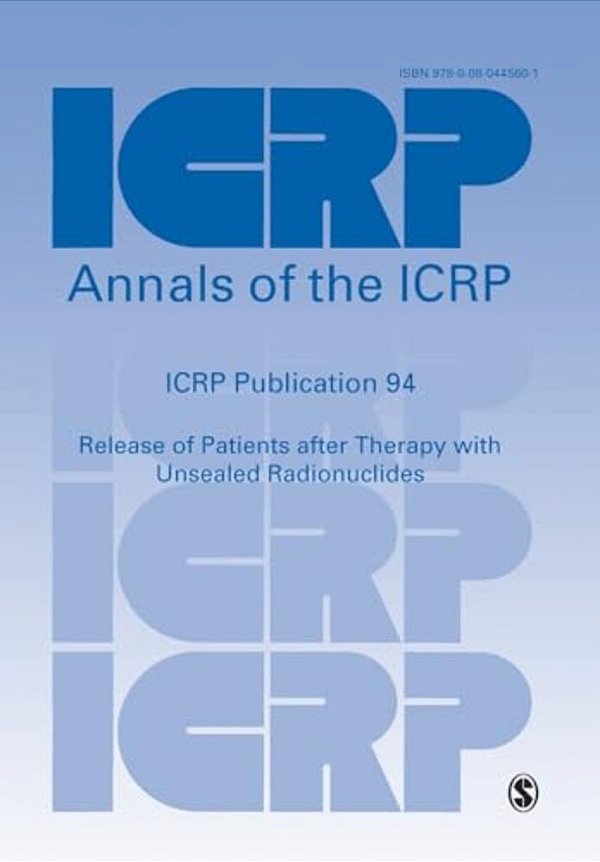
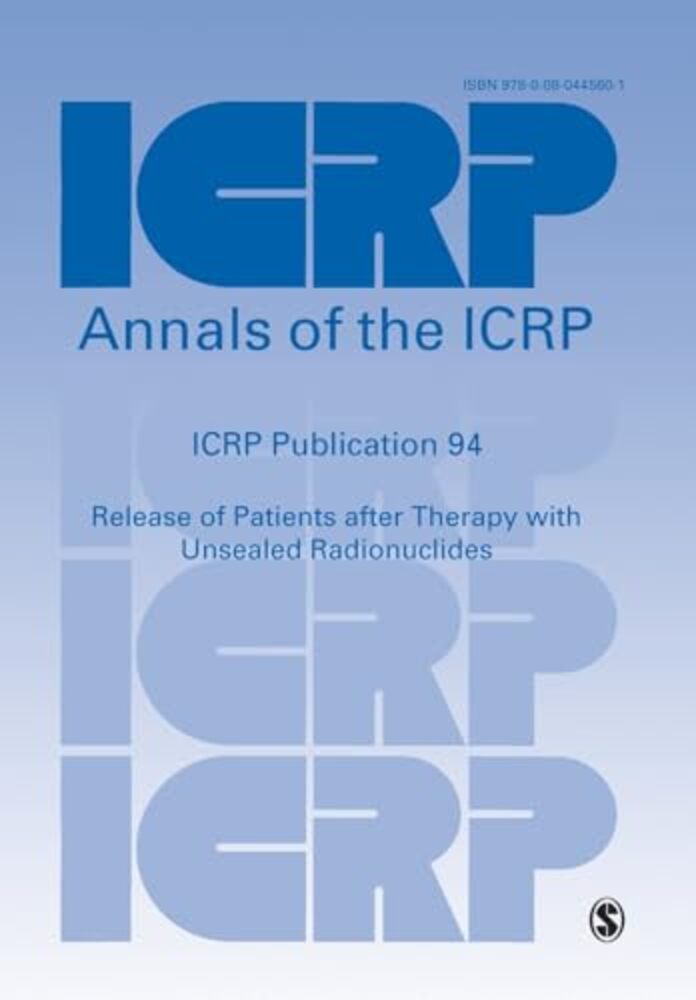
Icrp Publication 94: Release Of Patients After Therapy With Unsealed Radionuclides-..
-
- 1x de R$ 2.340,60 sem juros
- 2x de R$ 1.170,30 sem juros
- 3x de R$ 780,20 sem juros
- 4x de R$ 585,15 sem juros
-
R$ 2.223,57

-
R$ 2.340,60


After some therapeutic nuclear medicine procedures with unsealed radionuclides, precautions may be needed to limit doses to other people, but this is rarely the case after diagnostic procedures. Iodine-131 results in the largest dose to medical staff, the public, caregivers, and relatives. Other radionuclides used in therapy are usually simple beta emitters (e.g. phosphorus-32, strontium-89, and yttrium-90) that pose much less risk. Dose limits apply to exposure of the public and medical staff from patients. Previously, the ICRP has recommended that a source-related dose constraint for optimisation of a few mSv/episode applies to relatives, visitors, and caregivers at home, rather than a dose limit. The present report recommends that young children and infants, as well as visitors not engaged in direct care or comforting, should be treated as members of the public (i.e. be subject to the public dose limit). The modes of exposure to other people are: external exposure; internal exposure due to contamination; and environmental pathways. Dose to adults from patients is mainly due to external exposure. Contamination of infants and children with saliva from a patient could result in significant doses to the child's thyroid. It is important to avoid contamination of children and pregnant women. After radioiodine therapy, mothers must cease breastfeeding immediately. Many types of therapy with unsealed radionuclides are contraindicated in pregnant females. Women should not become pregnant for some time after radioisotope therapy. Technetium-99m dominates discharges to the environment from excreta of nuclear medicine patients, but its short half-life limits its importance. The second largest discharges, iodine-131, can be detected in the environment after medical uses but with no measurable environmental impact. Storing patients' urine after therapy appears to have minimal benefit.
| ISBN | 9780080445601 |
| Autor(a) | Icrp |
| Editora | Sage - Publications |
| Ano de edição | 2005 |
| Páginas | 84 |
| Acabamento | Brochura |
Produtos relacionados

Categorias
Conteúdo
Sobre a loja
Myre Livraria, sua livraria online especializada em importação e revenda de livros nacionais e internacionais. Oferecemos uma vasta seleção de materiais didáticos de alta qualidade para aprender inglês, espanhol, francês, alemão e muito mais. Aproveite preços competitivos e entrega rápida em todo o Brasil
Pague com

Selos

Myre Editora Ltda. - CNPJ: 50.295.718/0001-20 © Todos os direitos reservados. 2026
