


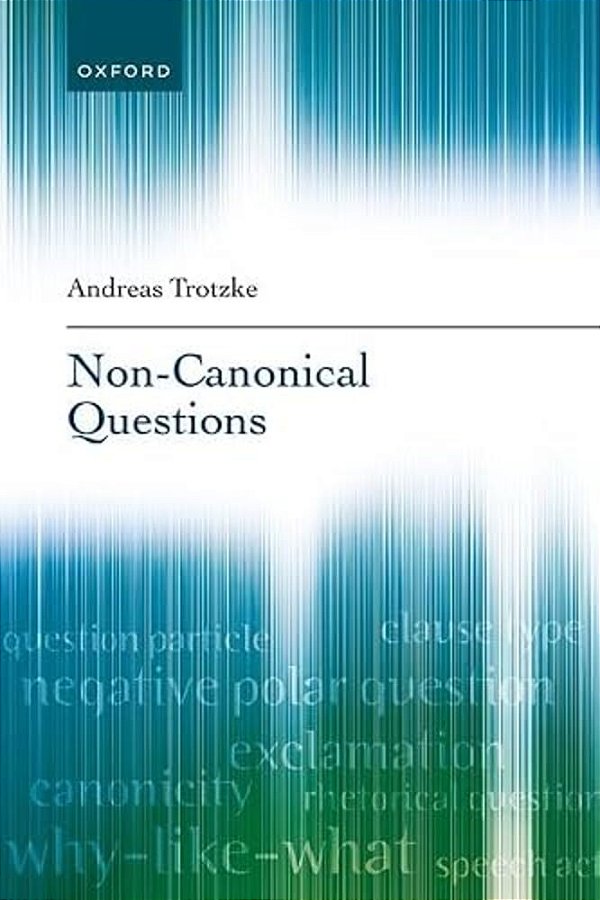
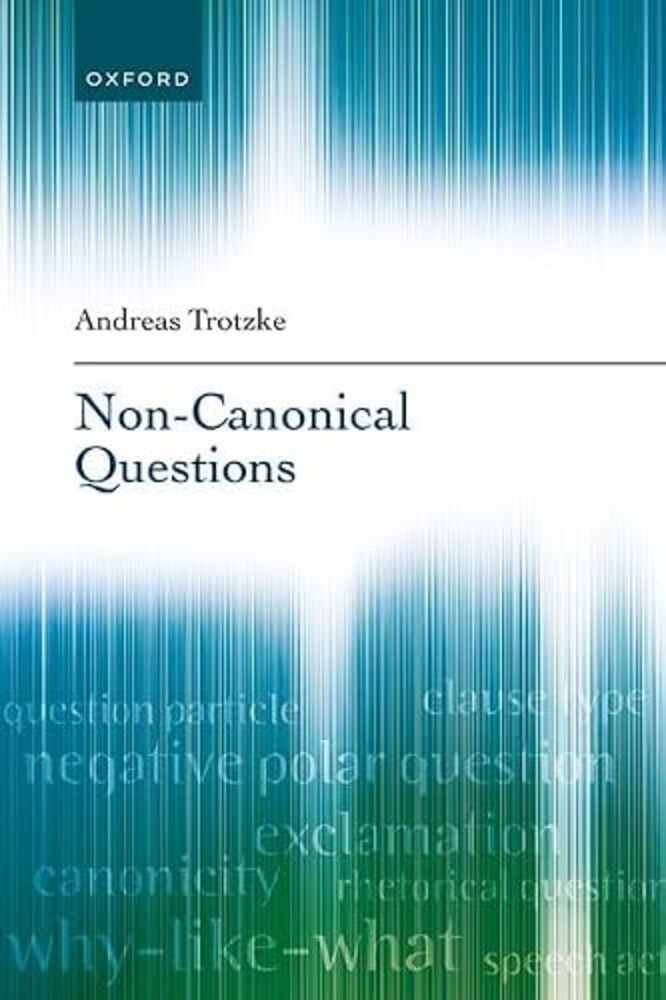
Non-Canonical Questions-..
-
- 1x de R$ 913,00 sem juros
- 2x de R$ 456,50 sem juros
- 3x de R$ 304,33 sem juros
- 4x de R$ 228,25 sem juros
-
R$ 867,35

-
R$ 913,00


This book is the first to present a comprehensive theory of non-canonical questions, those question types that do not (only) request information from the addressee, but rather (additionally) tell us something about the speaker's epistemic and/or emotional state, such as can't-find-the-value questions, echo questions, rhetorical questions, and surprise questions. While much recent research has explored the formal semantics and the phonetics and phonology of both canonical and non-canonical questions, the literature is still lacking a comprehensive account from a syntax-pragmatics perspective that brings together the multiple findings and strands of research from the last twenty years. The standard view in the syntax-pragmatics literature is that most special interpretations of non-canonical questions involve syntactic projections at or even above the level of illocutionary force. In this work, Andreas Trotzke argues that this approach is a mistake, and proposes a new alternative theory of non-canonical questions in which both their special pragmatics and their syntax, as well as in many cases their emotive component, can be derived solely from propositional-level operators that do not affect the illocutionary level of utterances and can be found across illocutionary forces. This account dramatically simplifies the syntactic analysis of non-canonical questions and is also able to capture some previously unobserved data in the discourse behavior of those question types.
| ISBN | 9780192872289 |
| Autor(a) | Trotzke, Andreas |
| Editora | Oxford University Press - USA |
| Ano de edição | 2024 |
| Páginas | 224 |
| Acabamento | Capa Dura |
| Dimensões | 22,90 X 16,00 |
Produtos relacionados
-
 Non-Canonical Cyclic Nucleotides-..R$ 2.489,92até 4x de R$ 622,48 sem jurosou R$ 2.365,42 via Pix
 -
 Verbless Sentences In Spoken Italian: A Non-Canonical Encoding Of Grammatical Relations-..R$ 539,09até 4x de R$ 134,77 sem jurosou R$ 512,14 via Pix
-

Categorias
Conteúdo
Sobre a loja
Myre Livraria, sua livraria online especializada em importação e revenda de livros nacionais e internacionais. Oferecemos uma vasta seleção de materiais didáticos de alta qualidade para aprender inglês, espanhol, francês, alemão e muito mais. Aproveite preços competitivos e entrega rápida em todo o Brasil
Pague com

Selos

Myre Editora Ltda. - CNPJ: 50.295.718/0001-20 © Todos os direitos reservados. 2026
