

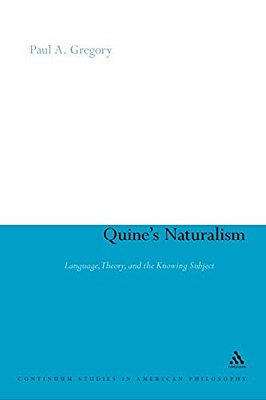
Quine's Naturalism-..
-
- 1x de R$ 1.826,00 sem juros
- 2x de R$ 913,00 sem juros
- 3x de R$ 608,66 sem juros
- 4x de R$ 456,50 sem juros
-
R$ 1.734,70

-
R$ 1.826,00


W. V. Quine was the most important naturalistic philosopher of the twentieth century and a major impetus for the recent resurgence of the view that empirical science is our best avenue to knowledge. His views, however, have not been well understood. Critics charge that Quine's naturalized epistemology is circular and that it cannot be normative. Yet, such criticisms stem from a cluster of fundamental traditional assumptions regarding language, theory, and the knowing subject - the very presuppositions that Quine is at pains to reject. Through investigation of Quine's views regarding language, knowledge, and reality, the author offers a new interpretation of Quine's naturalism. The naturalism/anti-naturalism debate can be advanced only by acknowledging and critiquing the substantial theoretical commitments implicit in the traditional view.
Gregory argues that the responses to the circularity and non-normativity objections do just that. His analysis further reveals that Quine's departure from the tradition penetrates the conception of the knowing subject, and he thus offers a new and engaging defence of Quine's naturalism.
W. V. Quine was the most important naturalistic philosopher of the twentieth century and a major impetus for the recent resurgence of the view that empirical science is our best avenue to knowledge. His views, however, have not been well understood. Critics charge that Quine's naturalized epistemology is circular and that it cannot be normative. Yet, such criticisms stem from a cluster of fundamental traditional assumptions regarding language, theory, and the knowing subject - the very presuppositions that Quine is at pains to reject. Through investigation of Quine's views regarding language, knowledge, and reality, the author offers a new interpretation of Quine's naturalism. The naturalism/anti-naturalism debate can be advanced only by acknowledging and critiquing the substantial theoretical commitments implicit in the traditional view.
Gregory argues that the responses to the circularity and non-normativity objections do just that. His analysis further reveals that Quine's departure from the tradition penetrates the conception of the knowing subject, and he thus offers a new and engaging defence of Quine's naturalism.
| ISBN | 9780826490995 |
| Autor(a) | Gregory, Paul A. |
| Editora | Bloomsbury Publishing Plc |
| Ano de edição | 2008 |
| Páginas | 156 |
| Acabamento | Capa Dura |
Produtos relacionados
-
 Quine's Naturalism: Language, Theory And The Knowing Subject-..R$ 439,49até 4x de R$ 109,87 sem jurosou R$ 417,52 via Pix
 -
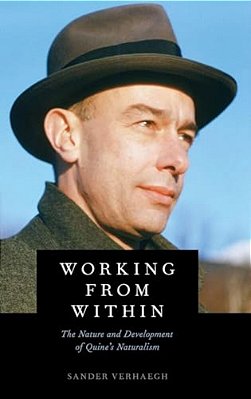 Working From Within: The Nature And Development Of Quine's Naturalism-..R$ 996,00até 4x de R$ 249,00 sem jurosou R$ 946,20 via Pix
 -
 Quine's Epistemic Norms In Practice: Undogmatic Empiricism-..R$ 996,00até 4x de R$ 249,00 sem jurosou R$ 946,20 via Pix
-
Myre Livraria, sua livraria online especializada em importação e revenda de livros nacionais e internacionais. Oferecemos uma vasta seleção de materiais didáticos de alta qualidade para aprender inglês, espanhol, francês, alemão e muito mais. Aproveite preços competitivos e entrega rápida em todo o Brasil


Myre Editora Ltda. - CNPJ: 50.295.718/0001-20 © Todos os direitos reservados. 2026
