


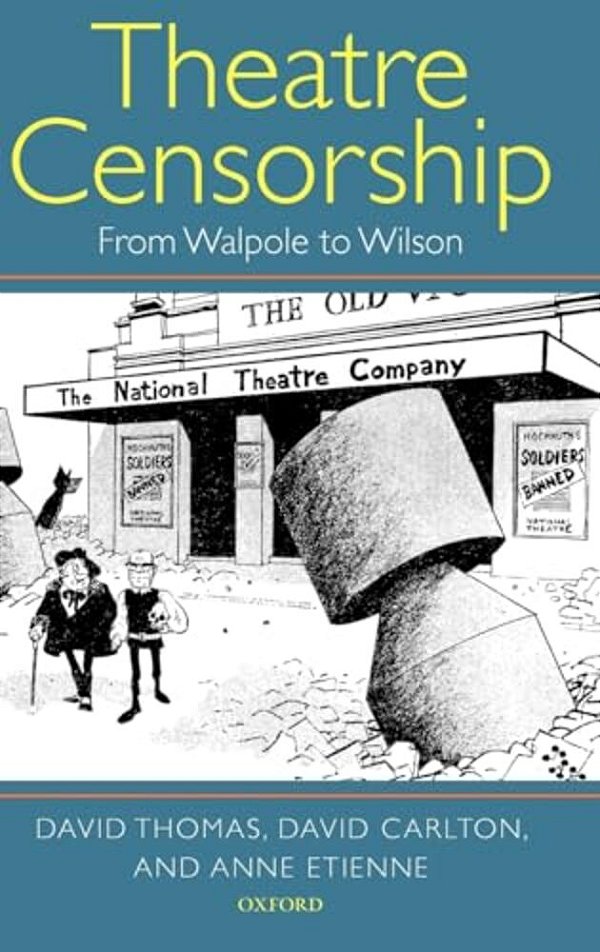
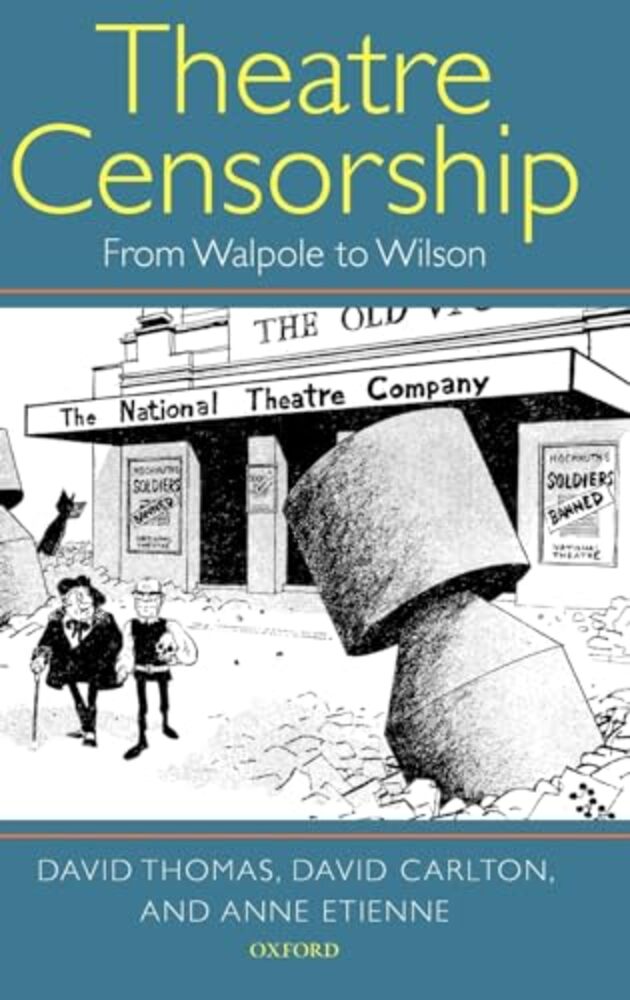
Theatre Censorship: From Walpole To Wilson-..
-
- 1x de R$ 1.660,00 sem juros
- 2x de R$ 830,00 sem juros
- 3x de R$ 553,33 sem juros
- 4x de R$ 415,00 sem juros
-
R$ 1.577,00

-
R$ 1.660,00


Using previously unpublished material from the National Archives, David Thomas, David Carlton, and Anne Etienne provide a new perspective on British cultural history. Statutory censorship was first introduced in Britain by Sir Robert Walpole with his Licensing Act of 1737. Previously theatre censorship was exercised under the Royal Prerogative. By giving the Lord Chamberlain statutory powers of theatre censorship, Walpole ensured that confusion over the relationship between the Royal Prerogative and statute law would prevent any serious challenge to theatre censorship in Parliament until the twentieth century. The authors place theatre censorship legislation and its attempted reform in their wider political context. Sections outlining the political history of key periods explain why theatre censorship legislation was introduced in 1737, why attempts to reform the legislation failed in 1832, 1909, and 1949, and finally succeeded in 1968. Opposition from Edward VII helped to prevent the abolition of theatre censorship in 1909. In 1968, theatre censorship was abolished despite opposition from Elizabeth II, Lord Cobbold (her Lord Chamberlain) and Harold Wilson (her Prime Minister). There was strong support for theatre censorship on the part of commercial theatre managers who saw censorship as offering protection from vexatious prosecution. A policy of inertia and deliberate obfuscation on the part of Home Office officials helped to prevent the abolition of theatre censorship legislation until 1968. It was only when playwrights, directors, critics, audiences, and politicians (notably Roy Jenkins) applied combined pressure that theatre censorship was finally abolished. The volume concludes by exploring whether new forms of covert censorship have replaced the statutory theatre censorship abolished with the 1968 Theatres Act.
Thomas, David
Presta consultoria em diferentes áreas, como aeroespacial, bancária, de serviços financeiros, telecomunicações, viagens e Internet. Antes de se mudar para os Estados Unidos, em 1994, fundou na Inglaterra uma empresa de criação de software certificada pela ISO9001 que distribuiu mundialmente projetos sofisticados e personalizados. Hoje, Thomas é consultor independente e vive em Dallas, Texas. |
| ISBN | 9780199260287 |
| Autor(a) | Thomas, David |
| Editora | Oup Oxford |
| Ano de edição | 2008 |
| Páginas | 300 |
| Acabamento | Capa Dura |
Produtos relacionados
-
 Horace Walpole: The Critical Heritage-..R$ 572,62até 4x de R$ 143,15 sem jurosou R$ 543,99 via Pix
 -
 Censoring Translation: Censorship, Theatre, And The Politics Of Translation-..R$ 1.452,50até 4x de R$ 363,12 sem jurosou R$ 1.379,88 via Pix
 -
 Censoring Translation: Censorship, Theatre, And The Politics Of Translation-..R$ 406,29até 4x de R$ 101,57 sem jurosou R$ 385,98 via Pix
-


Categorias
Conteúdo
Sobre a loja
Myre Livraria, sua livraria online especializada em importação e revenda de livros nacionais e internacionais. Oferecemos uma vasta seleção de materiais didáticos de alta qualidade para aprender inglês, espanhol, francês, alemão e muito mais. Aproveite preços competitivos e entrega rápida em todo o Brasil
Pague com

Selos

Myre Editora Ltda. - CNPJ: 50.295.718/0001-20 © Todos os direitos reservados. 2026
